
Articles similar to this one:
Flying internationally with a dog is often imagined as a logistical challenge filled with paperwork, restrictions, and uncertainty. But what is rarely explained is what the actual journey feels like when you and your pet are onboard a modern shared charter flight.
This guide focuses not on regulations or checklists, but on the real travel experience from departure in the United States to arrival in Italy, specifically through a luxury shared charter model designed for pet owners.
TuscanHound Air operates shared charter flights between the U.S. and Italy, created for travelers who want a calm, structured, and pet-centered alternative to commercial aviation.
Before You Even Arrive at the Airport
Unlike commercial airline travel, the experience begins long before you step into a terminal.
On shared charter routes, passengers are part of a pre-coordinated flight group. This means travel details, timing windows, and boarding instructions are clearly communicated in advance, reducing uncertainty on travel day.
There is no crowded check-in hall, no long queues, and no unpredictable gate changes.
Instead, the experience is designed to feel organized, quiet, and controlled from the beginning.
For pet owners, this pre-structured environment immediately reduces one of the biggest stress factors in international travel: unpredictability.
Arrival at a Private Aviation Terminal in the United States
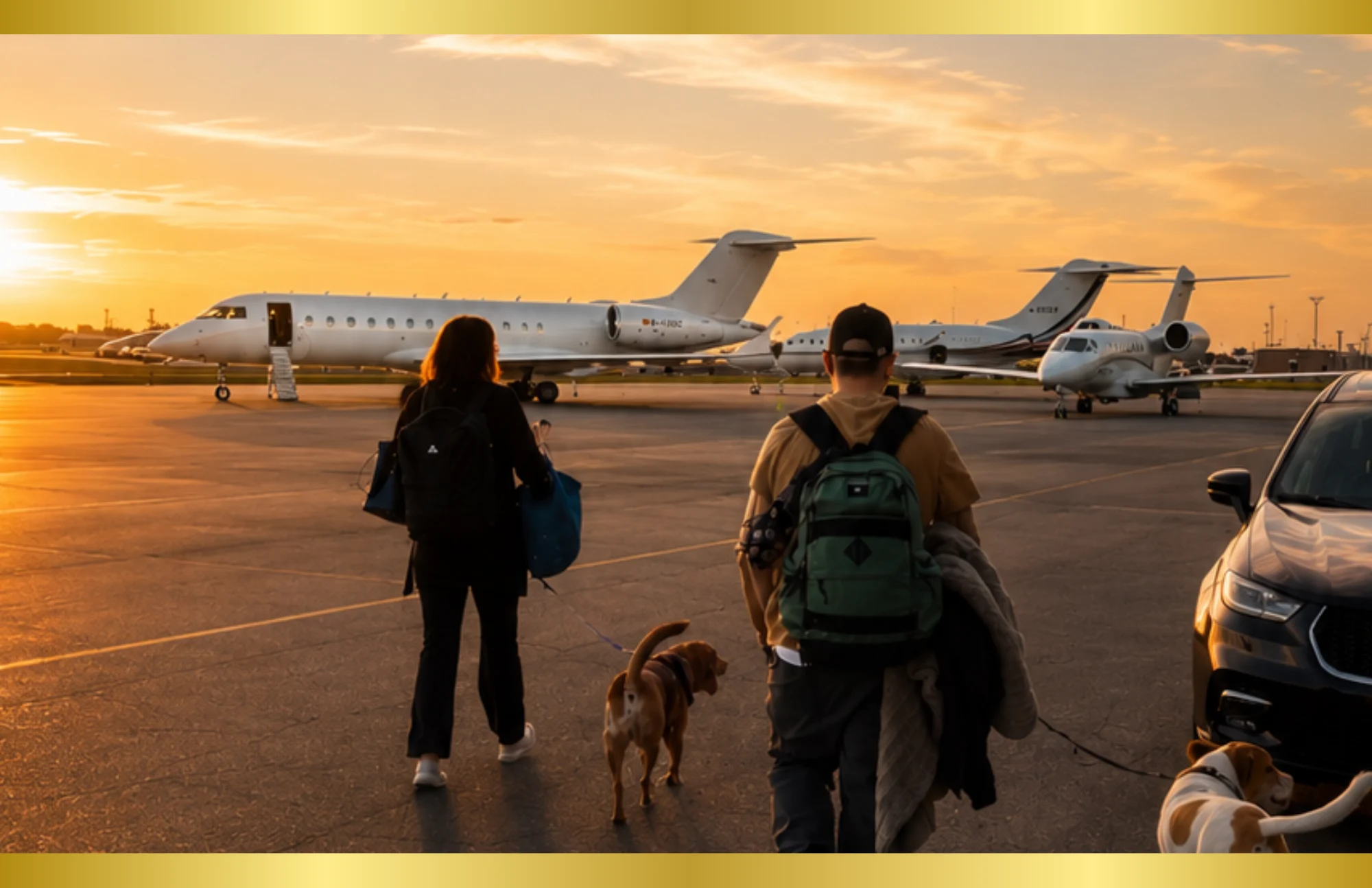
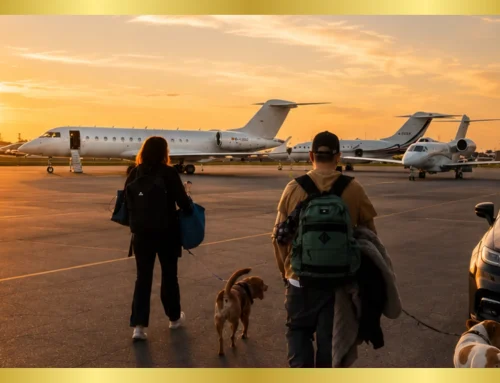
On the day of departure, passengers arrive at a private aviation terminal rather than a commercial airport.
This shift alone changes the entire emotional tone of the journey.
Instead of noise, crowds, and long security lines, the environment is:
- Quiet and low-traffic
- Designed for small passenger groups
- Efficient and movement-oriented
- Calm for both humans and animals
Pets are not rushed through busy terminals or exposed to overwhelming environments. The atmosphere is intentionally minimal and controlled.
The boarding process is also significantly faster than commercial travel, with streamlined procedures that reduce waiting time.
Boarding the Aircraft: A Different Kind of Calm
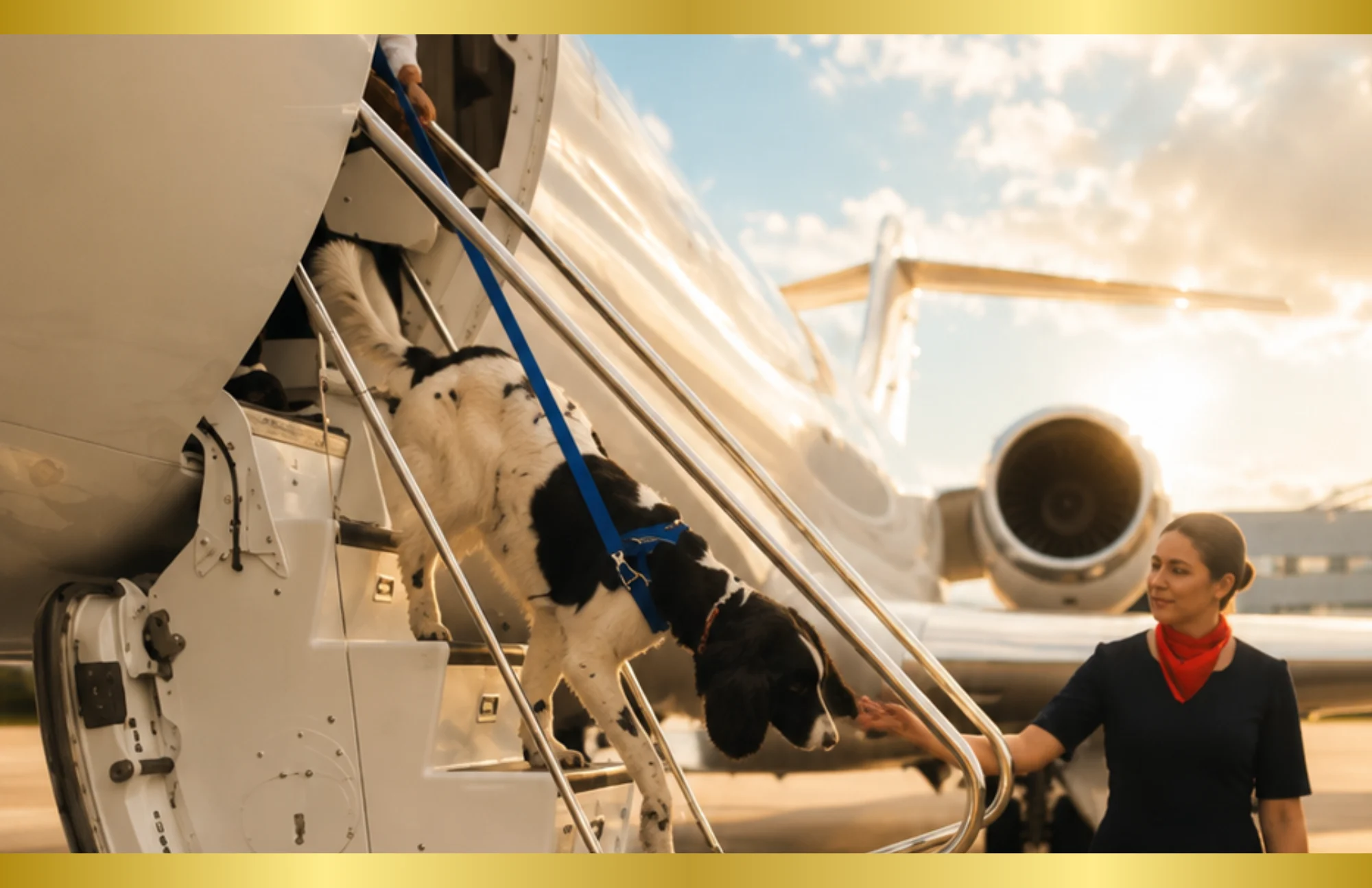
Once boarding begins, passengers step directly into a cabin environment that feels more spacious and private than commercial aviation.
Because the flight is a shared charter model, the passenger group is intentionally limited and curated. This creates a quieter cabin dynamic with fewer disruptions and a more predictable atmosphere.
For pets, this matters more than most people realize.
Animals are highly sensitive to:
- Noise levels
- Sudden movement
- Crowded spaces
- Unfamiliar stimulation
A controlled cabin environment significantly reduces anxiety and allows pets to settle more naturally during the flight.
In-Flight Experience: A Focus on Stability and Comfort
Once airborne, the experience becomes centered around consistency and comfort for both passengers and pets.
Unlike commercial flights, where cabin activity can vary widely, shared charter environments are designed to remain steady and calm throughout the journey.
Key characteristics include:
- Reduced passenger movement
- Lower ambient noise levels
- Predictable cabin environment
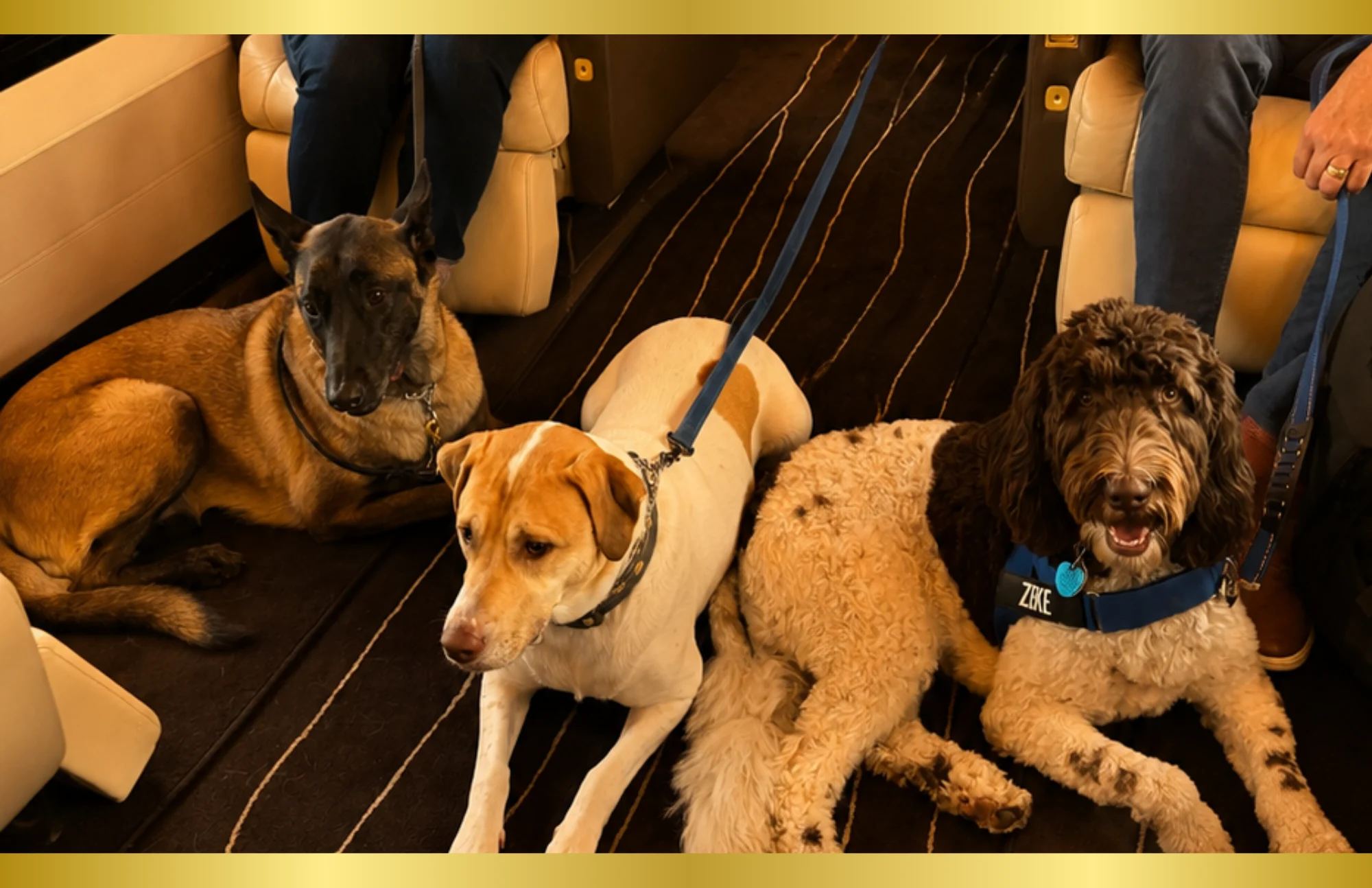
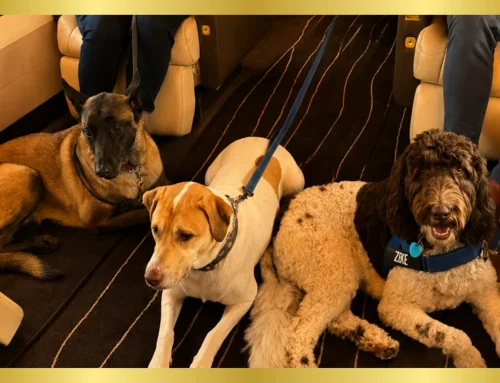
- Dedicated space for pet comfort beside owners
Pets remain with their owners throughout the entire flight, which helps maintain emotional stability during long-haul travel.
Instead of separation or cargo handling, animals are able to remain in a familiar presence for the duration of the journey.
Healthy Cabin Air Pressure and Comfort at Altitude
One often overlooked part of air travel is cabin pressurization.
Modern charter aircraft maintain healthy, stable cabin air pressure levels during cruise, typically set at a lower “cabin altitude” compared to many older commercial aircraft. This helps reduce physical stress on both passengers and animals during long flights.
For pets, stable cabin conditions combined with controlled pressurization contribute to:
- More consistent breathing comfort
- Reduced fatigue during long-haul travel
- A calmer overall physiological state
This controlled environment is part of what makes shared charter flights feel noticeably different from traditional commercial travel, especially on long routes such as the United States to Italy.
The Transatlantic Flight Phase
Flights between the United States and Italy typically span several hours across the Atlantic.
During this time, the cabin environment is designed to support rest and minimize disruption.
For many travelers, this is the first time they experience what international pet travel can feel like when the focus shifts away from logistics and toward comfort.
There is no transfer of pets between locations, no secondary handling systems, and no separation at any stage of the flight.
The experience is continuous from departure to arrival.
Arrival Approach into Italy
As the aircraft approaches Italy, the transition from flight to arrival is smooth and structured.
Passengers prepare for landing in a controlled environment, without the congestion often associated with commercial airport arrivals.
Because shared charter flights operate through private aviation channels, disembarkation is typically faster and more direct than traditional airline processes.
For pets, this means fewer stressful transitions and less exposure to unfamiliar environments after landing.
Arrival in Milan: The Final Transition
Upon landing in Milan, passengers enter a simplified arrival process designed for international aviation travelers.
Instead of navigating large terminal crowds, the transition is:
- Direct
- Efficient
- Organized for smaller passenger groups
Pets remain with their owners throughout the arrival process, ensuring continuity of comfort from the aircraft to ground entry.
This final stage completes a travel experience that is designed to remain stable from beginning to end.
What Makes the Experience Different for Pets
The most important difference in a shared charter environment is not luxury—it is consistency.
Pets experience:
- No separation from owners
- No cargo transport
- No transfers between handlers
- No exposure to large public terminals
This consistency is what reduces stress for animals during long-distance travel.
For many pet owners, the emotional difference is just as important as the physical comfort.
What Makes It Different for Owners
For passengers, the experience is defined by predictability and reduced friction.
Instead of managing:
- Airline restrictions
- Boarding uncertainty
- Pet handling logistics
- Airport stress
Travelers move through a structured, pre-planned journey with fewer unknowns.
This allows owners to focus less on logistics and more on the actual travel experience.
Who This Type of Travel Is Designed For
Shared charter pet-focused flights are designed for travelers who prioritize continuity and calm during international travel.
This includes:
- Pet owners traveling long distances between continents
- Individuals relocating between the U.S. and Europe
- Frequent international travelers with companion animals
- Travelers seeking structured alternatives to commercial aviation
The model is not about exclusivity—it is about reducing disruption in long-haul pet travel.
A Shift in How International Pet Travel Feels
For decades, international pet travel has been defined by separation, complexity, and uncertainty.
The shared charter model represents a shift toward:
- Continuous owner-pet proximity
- Reduced environmental stress
- Structured travel environments
- Predictable international routing
Instead of adapting pets to the limitations of commercial aviation, the experience is built around maintaining stability throughout the journey.
Final Thoughts
Flying from the United States to Italy with a dog is not just a logistical process—it is an experience that can feel dramatically different depending on the travel method chosen.
Shared charter flights create a structured environment where pets remain with their owners, travel conditions are controlled, and the journey itself becomes more predictable and calm.
For many travelers, the most meaningful difference is not the destination or the aircraft—it is the ability to move across continents without separation, stress, or uncertainty.
And that shift is redefining what international pet travel can feel like.